Motion Sickness 101: Causes, Symptoms, and Effective Motion Sickness Relief

Traveling can be an exciting adventure, whether you’re hitting the open road in a car, setting sail on a boat, soaring through the sky in a plane, or even trying out the latest virtual reality game. Yet, for many people, the thrill of the journey can be quickly overshadowed by a common and uncomfortable experience: motion sickness. This condition doesn’t just strike on boats (seasickness), in cars (carsickness), or on airplanes (airsickness)—it can also occur on trains, buses, amusement park rides, or even while using screens and simulators. Motion sickness can turn an anticipated trip into an unpleasant ordeal, leading to feelings of nausea, dizziness, and vomiting [1]. But what exactly causes motion sickness, what are its typical motion sickness symptoms, and, most importantly, how can you find effective motion sickness relief? This article will explore these questions, offering clear insights and practical strategies to help you navigate all kinds of travel and motion experiences more comfortably.
How Motion Sickness Starts: The Sensory Conflict
At its core, motion sickness is a mismatch of signals. Your brain relies on information from several senses to understand your body's position and movement [1]. These include:
- Your inner ears.
- Your eyes.
- Sensory nerves in your joints and muscles.
Common Motion Sickness Symptoms to Recognize
Recognizing the early motion sickness symptoms can help you take steps for relief before they become severe. The symptoms can vary in intensity from person to person, but typically include a combination of the following [1]:
- Nausea
- Dizziness
- Vomiting and retching
- “Cold Sweats”
- Facial pallor
- Salivation
- Headache
- Fatigue
Effective Motion Sickness Remedies and Prevention Strategies
Behavioral and Environmental Adjustments
Making simple changes to your environment or behavior can significantly reduce your chances of experiencing motion sickness.
- Choose the Right Seat: In a car, sit in the front seat and look at the horizon. On a boat, choose a cabin near the center or upper deck. On a plane, pick a window seat over the wing [4]. These spots tend to have less perceived motion.
- Focus Your Gaze on the horizon. [2]
- Avoid Reading and Screens. [2]
- Recline or Lie Down. [2]
- Limit Food and Drink: Before and during travel, avoid heavy, greasy, or acidic foods. Stick to bland snacks like crackers and clear liquids [4].
Products for Motion Sickness
When behavioral tactics aren't enough, over-the-counter (OTC) medications can be used for motion sickness relief.
- Pepto Nausea Motion Sickness Tablets (Meclizine HCL) prevents and treats nausea, vomiting, and dizziness associated with motion sickness.
- Pepto Nausea Ginger Gummies contains ginger [4] to help prevent occasional nausea due to motion sickness.*
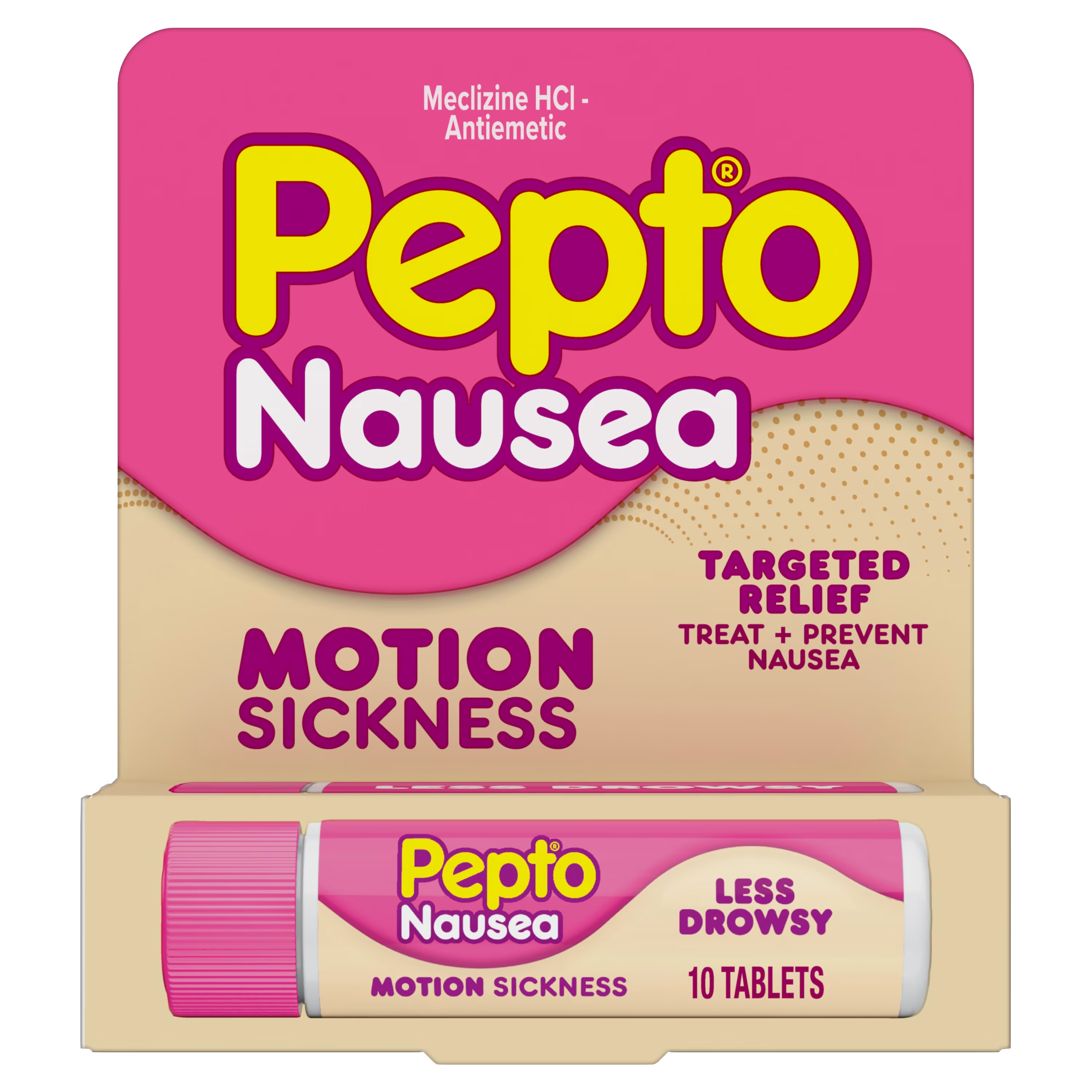
Pepto Nausea Motion Sickness Tablets

Pepto Nausea Ginger Gummy
When to Consult a Healthcare Professional
While most cases of motion sickness are manageable with home and OTC remedies, there are times when it's wise to consult a doctor. Seek medical advice if your motion sickness symptoms are severe or persistent, leading to dehydration or significant discomfort.
Equip yourself with the right knowledge and tools, and you can face your next adventure with greater confidence and less worry about motion sickness.
Enjoy the ride!
Equip yourself with the right knowledge and tools, and you can face your next adventure with greater confidence and less worry about motion sickness.
Enjoy the ride!
References:
- "Motion Sickness." MedlinePlus, National Library of Medicine, 22 Aug. 2023, https://medlineplus.gov/motionsickness.html.
- "CDC Yellow Book 2024: Motion Sickness." Centers for Disease Control and Prevention, Centers for Disease Control and Prevention, 19 Apr. 2024, https://www.cdc.gov/yellow-book/hcp/travel-air-sea/motion-sickness.html.
- Benson, Alan J. "Prevention and Treatment of Motion Sickness." American Family Physician, vol.90, no. 1, 1 July 2014, pp. 41-48, https://www.aafp.org/pubs/afp/issues/2014/0701/p41.html.
- "First aid: Motion sickness." Mayo Clinic, Mayo Foundation for Medical Education and Research, 13 May 2022, https://www.mayoclinic.org/first-aid/first-aid-motion-sickness/basics/art-20056697.


