Understanding Motion Sickness: Why Do You Feel Nauseous While Traveling?

Traveling can be exciting, but for many, the journey itself can bring discomfort. If you've ever wondered “why do I get sick when I travel,” you're not alone. Motion sickness is a common problem that happens when your senses send mixed signals to your brain [2]. Your eyes might tell your brain you are moving, while your inner ear, which helps with balance, might sense that you are sitting still. This confusion can lead to:
- Feelings of nausea
- Dizziness
- Even vomiting [2]
Effective Strategies to Prevent Motion Sickness
Preventing motion sickness often starts before you even begin your journey. Taking a few simple steps can make a big difference in how you feel while traveling.
Before You Go: Planning Ahead
Choosing the right spot can significantly reduce your chances of feeling unwell:
- In a car: Try to sit in the front seat and look out at the horizon [1].
- On a plane: Seats over the wing tend to have less motion, which can help with airplane motion sickness.[1]
- On a boat: Staying in the middle or center of the boat or on the deck where you can see the horizon might offer some relief [13].
- Eating frequent light, bland and low-fat meals before and during your trip [3].
- Avoiding strong odors [3].
- Making sure you get enough rest before traveling, as fatigue can worsen symptoms [3]
During Your Journey: Practical Tips
Once your journey begins, continue to use strategies to keep motion sickness at bay:
- Focus your eyes on a stable point in the distance, like the horizon [5].
- Try to avoid reading books or looking at screens [5].
- Sometimes, simply keeping your head still and resting against a back seat can help [1]
- And remember to breathe!
Travel Nausea Prevention
When these strategies and tips aren’t quite enough, there are effective over-the-counter drug choices and dietary supplement travel nausea products available. These options can provide support and help you enjoy your trip more comfortably.
- Antihistamines and meclizine are common and effective over-the-counter drug choices for preventing and treating motion sickness. [1] Consider Pepto Nausea Motion Sickness Tablets.
- Ginger has been used for centuries in traditional medicine for nausea. Consider Pepto Nausea Ginger Gummies, a dietary supplement, to help prevent occasional nausea due to motion sickness.*
When to Seek Medical Advice
While many cases of motion sickness can be managed with prevention and over-the-counter travel nausea remedies, there are times when it’s important to talk to a doctor. Seek medical attention if your symptoms are severe or don't improve with self-care. A healthcare professional can offer personalized advice and help ensure your travels are as safe and comfortable as possible.
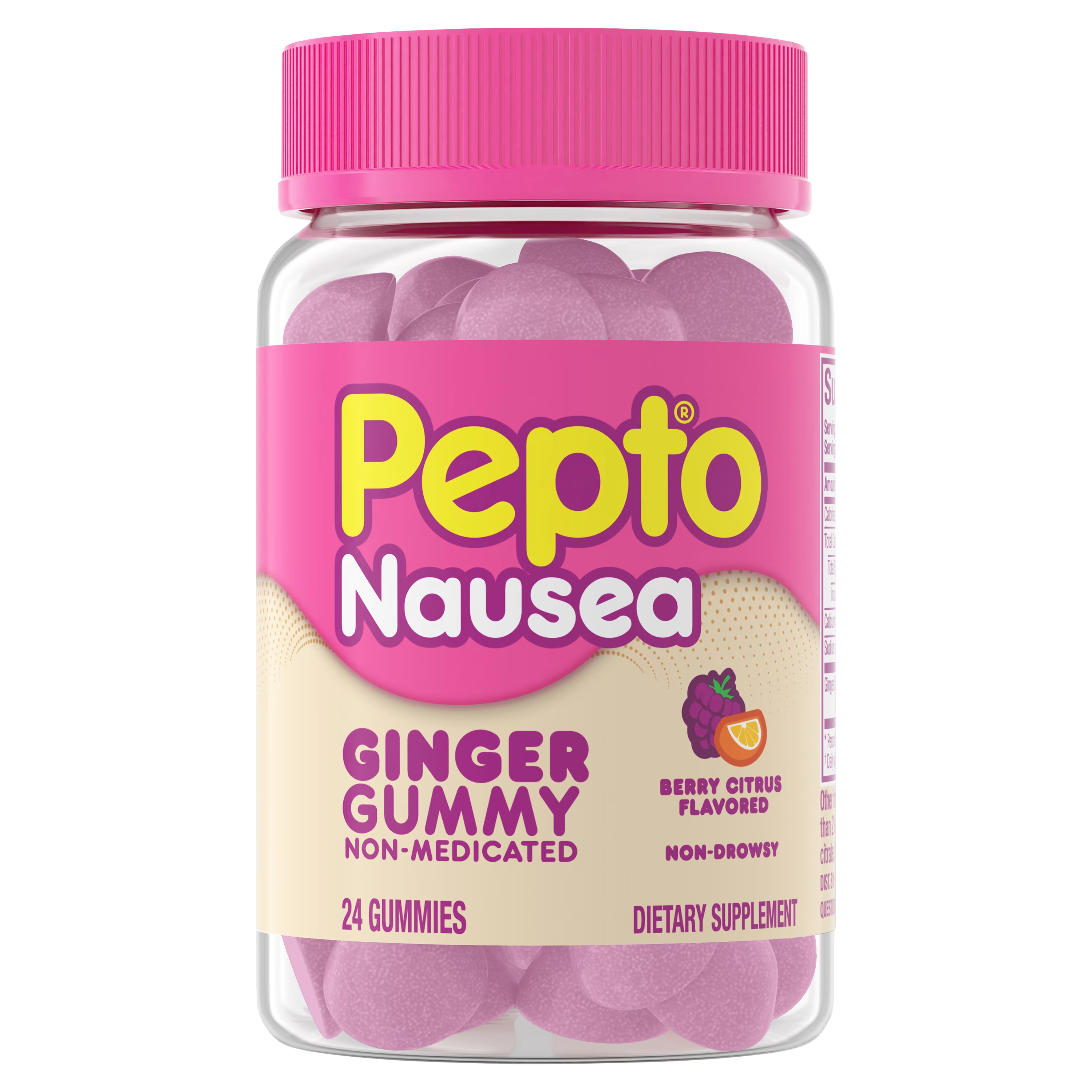
Pepto Nausea Ginger Gummy
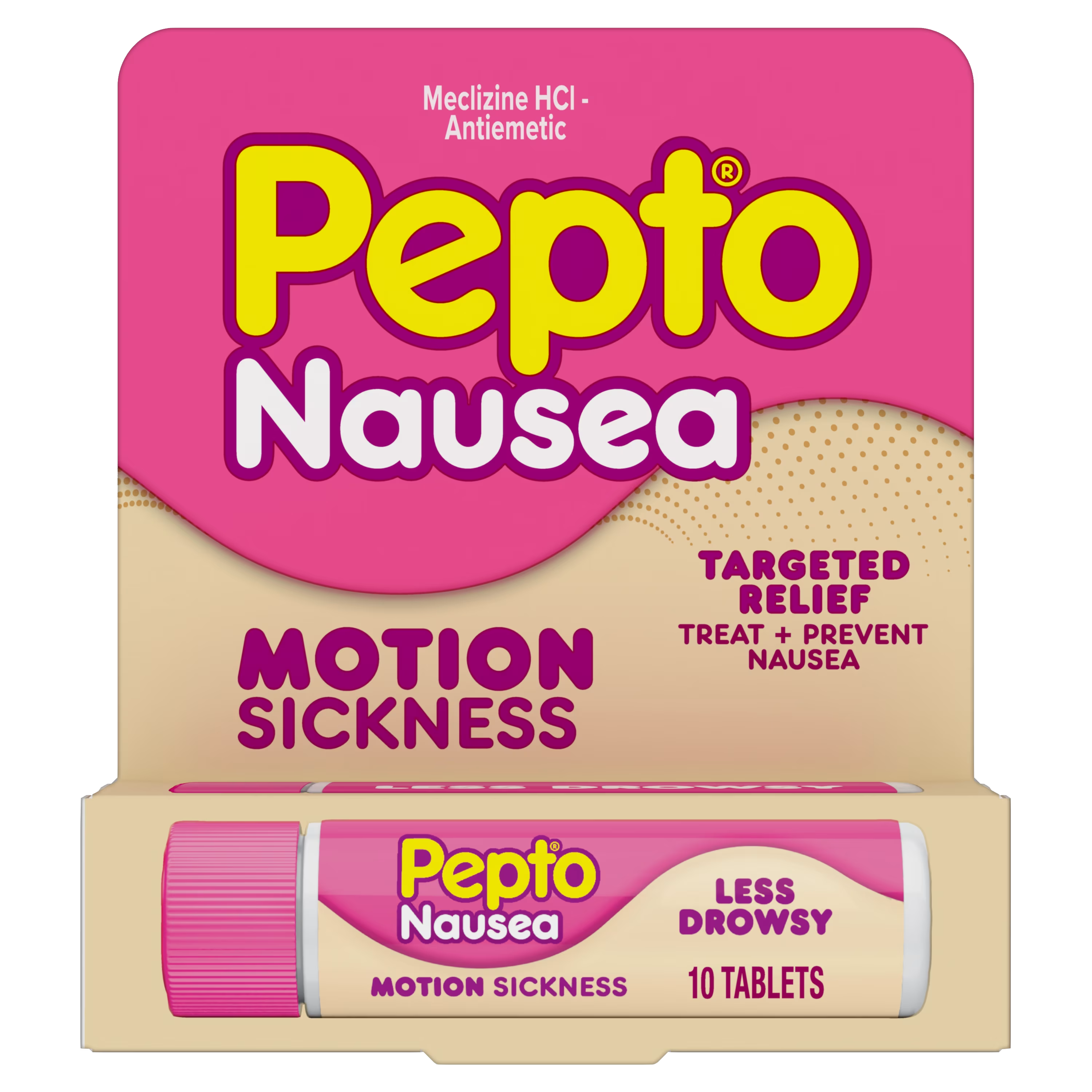
Pepto Nausea Motion Sickness Tablets
Traveling with Confidence: Your Guide to a Comfortable Journey
Remember, every journey is an opportunity for new experiences. Look for Pepto Nausea Motion Sickness Tablets (OTC Drug) and Pepto Nausea Ginger Gummies (Dietary Supplement), so you can enjoy your travel.
References:
- Mayo clinic. "Motion Sickness: First Aid." Mayo Clinic, https://www.mayoclinic.org/first-aid/first-aid-motion-sickness/basics/art-20056697.
- U.S. National Library of Medicine. "NIH MedlinePlus — Motion Sickness." MedlinePlus, https://medlineplus.gov/motionsickness.html.
- American Academy of Family Physicians. "Prevention and Treatment of Motion Sickness." AAFP, https://www.aafp.org/pubs/afp/issues/2014/0701/p41.html.
- Grøntved, A., et al. "Ginger root against seasickness (controlled trial)." PubMed, vol. 3277342, 1988, https://pubmed.ncbi.nlm.nih.gov/3277342/.
- Centers for Disease Control and Prevention. "CDC Yellow Book — Motion Sickness." CDC, https://www.cdc.gov/yellow-book/hcp/travel-air-sea/motion-sickness.html.


